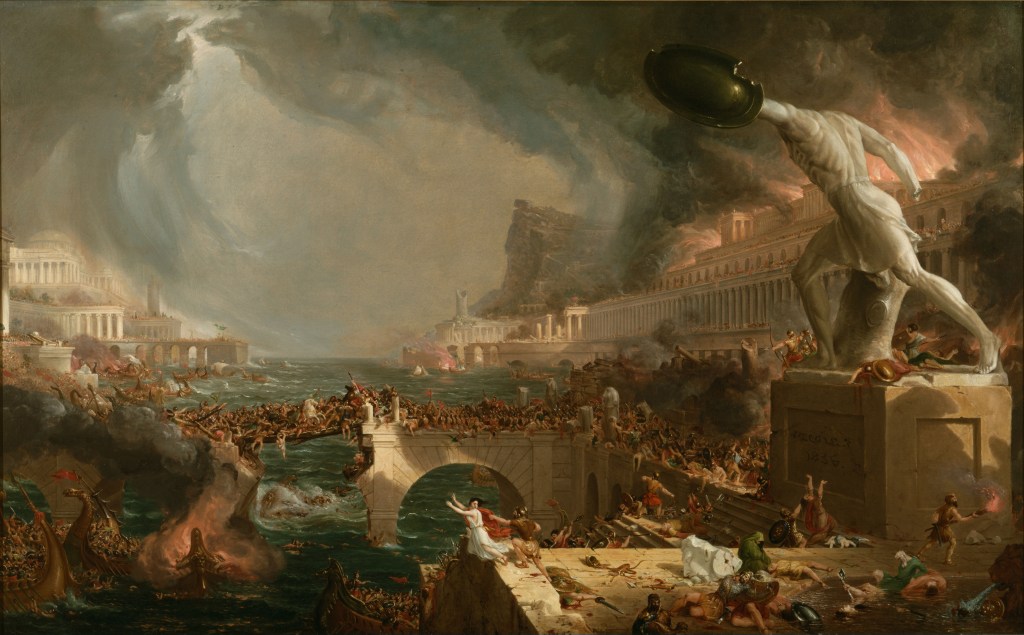
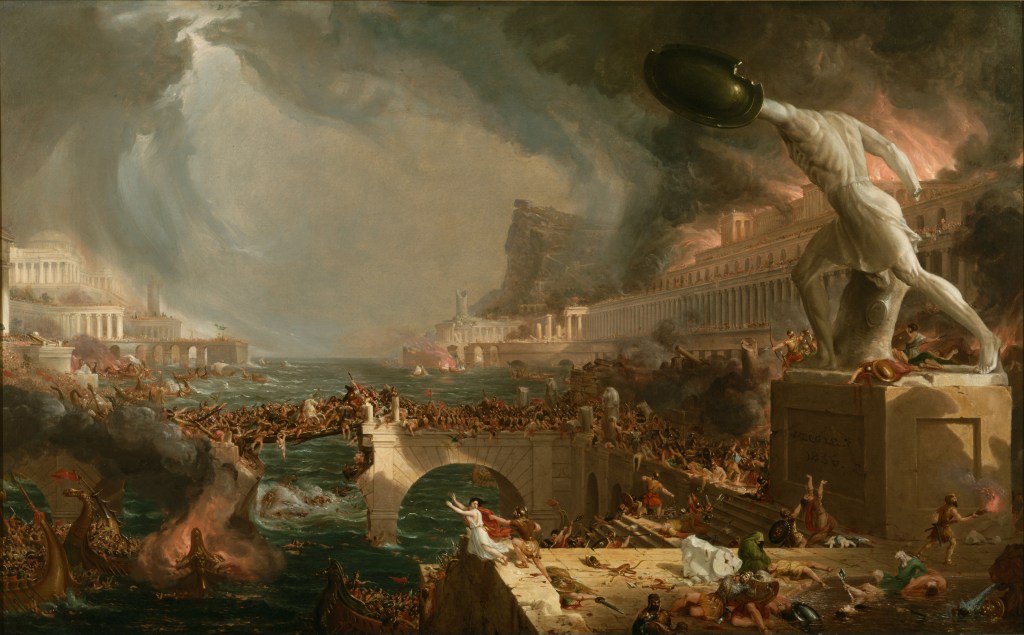
To say that we live in turbulent times might be an understatement. Every day, new headlines appear on every news station about a horrible event. Wars are raging again, extremism is rising, and intolerance is becoming more and more mainstream. In addition, the climate is changing, potentially harming us all, and the economic structures in place for the last 80 years are being redrawn. The only thing we need is another nuclear arms race to complete our sense of fatalism. It is no wonder then that people are losing hope.
Is every nation doomed to fail? It is one of those questions historians enjoy debating. Was the Roman Empire doomed to fall? Consequently, some argue that many factors contributed to its collapse, but their convergence ensured the Roman Empire’s ultimate downfall. Could the Romans have acted differently? Or were they destined to fail? A similar question concerns whether Germany was predestined to succumb to Nazism in the first half of the 20th century. This sparked a huge debate after the Second World War and throughout the latter half of the 20th century. Many intellectuals analysed how such horrific events could occur. Arendt saw the Banality of Evil as a key factor. Others believed it was the inherent psychology of Germans at the time. This is a well-known debate between Daniel Goldhagen, who argued that the Germans had a particular psychological makeup that almost preordained their fall to Nazism, and Christopher Browning, who contended that it was ordinary people succumbing to peer pressure who were to blame.
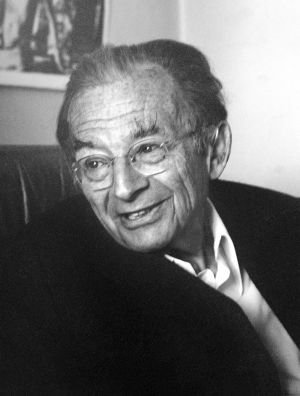
Erich Fromm also addressed this question, but from a psychological and humanistic perspective. He questioned whether the decline into Nazism could have been prevented or whether it was, in fact, doomed to fall. To do so, we need to explore the question of determinism. Only then can we consider whether we should give up hope.
Determinism and Fatalism
The idea behind determinism is quite simple: everything is determined in some way. Every effect has a cause, and this can be traced back to infinity. The causal chain is infinite. Your reading this is determined by previous causes, such as being born, having learned to read, and being interested in philosophy. In the same way, my writing this was determined by a variety of causes.
In philosophy, there is a debate about free will. If everything is determined in some way, can we have free will? Compatibilists will claim that yes, free will is possible within a deterministic worldview, whereas free will sceptics will argue that no, free will is not possible. I will not engage in this debate here, but determinism does propose a certain difficulty. If everything is determined, in what way are they predetermined? Does this mean that some things are just destined to happen because of a certain causal chain we inhabit?
Determinism can easily lead to fatalism, the idea that everything is fated to happen and that human beings have no influence on history. We are just riding the flow of time. The Stoics saw our position as a dog on a leash. We have no influence on where to go. The only thing we can do is accept the road we are going down or struggle against it, only inflicting more pain on ourselves. Such fatalism can lead to discouragement and ultimately to nihilism.
This is a problem. However, determinism does not entail predeterminism, which in turn does not entail fatalism. It is not because we are determined that we cannot influence the way history unfolds. The influence comes not from our free will but rather from our freedom.
Freedom and Alternativism
For Erich Fromm, freedom is one of the most important aspects of human beings. We should all strive to become freer human beings and to achieve a society that would make us freer. This is the first distinction between freedom and free will. Freedom is gradual. It can increase and decrease. Free will is all or nothing. Either you have it, or you don’t. Therefore, the question of free will is not really a fundamental question for Fromm. It is quite clear that it is not free. If you reflect on your own life, you would understand that many things influence your will. The fact that you want to be studying philosophy is not something you have consciously chosen. It is rather something that happens to you.
Freedom can be cultivated. This can be done in two ways. The first is the elimination of external constraints, called negative freedom. If you do not have the money to go to university, you do not have the freedom to do so. The second is the increase in your own capacity for creative power, called positive freedom. You have to train to play football competitively. We should then be more focused on freedom instead of free will.
In the determinism debate, Fromm has a small issue that many thinkers seem not to see. That is the problem of alternative choices. Imagine the situation where a man is about to cheat on his wife with another woman. Usually, these thought experiments stop the clock and ask us: ‘Did he have an alternative choice?’ The debate then goes to yes or no. But Fromm believes that this is the wrong way to look at it. For him, it is quite clear that at that exact moment, the man has no other possibility than cheating on his wife. But what about the whole history that led to this moment?
The man might behave differently when he is drunk. He might not be able to stop drinking after one alcoholic drink. Or he might not even be able to order something other than alcohol when he goes to a bar. The question Fromm asks is: ‘When was an alternative possibility possible? And when did such possibilities disappear?’ This is different for every person. Some have better willpower than others because of their personal history. Others never develop a drinking habit in bars. So, alternative possibilities are highly personal. But on a personal level, we need to ask when that alternative possibility ceased to exist.
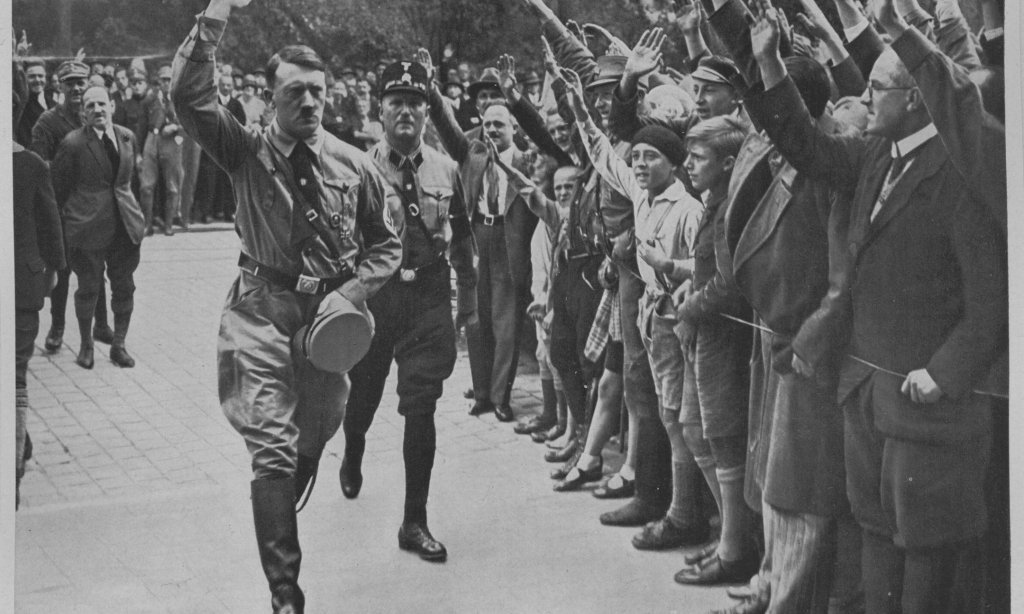
The same can then be done on a more collective basis. When taking the example of Germany, when was the moment the alternative possibility of not descending into Nazism became impossible? Just as it would be strange to say that a five-year-old boy is inevitably destined to cheat on his wife, it is also strange to claim that Nazi Germany was already inevitable in the time of Bismarck or even among the Germanic tribes. But maybe it became fixed when Hitler attacked Poland in 1939? Or maybe it was already too late in 1933 when he rose to power? Or was it already fixed during the Bierkellerputsch of 1923?
These are all possible answers, but what is most important for Fromm is not when those possibilities ceased to exist (since we can only know this after the facts), but rather that there exist alternative possibilities. For Fromm, genuine choices are largely illusory. What troubles him is the supposed “irreversibility of causal determination,” or the idea that it is impossible to exert any influence on that determination. But through his idea of alternative possibilities, he finds a way to include personal influence on that determination. But how do we influence our causal determination?
Insight and alternatives
The most important factor for increasing our freedom and expanding future possibilities is insight. For Fromm, insight means truly understanding and internalising the cause of an event. If we know what factors caused a particular event, we can take action to prevent those causes from recurring. If those factors are absent, there is only a small chance it might happen again. That is why Fromm aimed to understand and analyse the causes of totalitarianism. If we can identify the factors that led to those regimes, we can work to prevent them from emerging.
Which factors will exist in the future depend on the actions we take now. If our actions reinforce factors that lead toward a negative future, the point of no return will arrive sooner. The reverse is also true. Thinking itself affects the causal chain. There is a difference between a causal chain in which people reflect and one in which they do not. Whether or not people think, however, is itself influenced by other causal forces beyond their immediate control. Still, it would be strange to believe that everything in the causal chain affects us except us.
However, you cannot choose to gain insight. You do not know what you do not know. Therefore, there is an immense responsibility for those who have insight into various factors to share it with the wider community. Being an expert in a field comes with a duty to the community to help them understand what you know in the best way. This also implies a certain trust in experts that they, in fact, have insights we do not. Not believing these experts because you do not trust them would be quite disastrous for the broader community. But most of the time, the lack of trust stems from experts’ inability to convey their expertise.
Losing and Finding Hope
This brings us to the pressing question: Is it too late? Are we doomed to fail? Jared Diamond, in his book Collapse, identifies five factors that lead societies or political systems to disintegrate: climate change, hostile neighbours, the loss of essential trading partners, environmental problems, and the failure to address any of the preceding factors. These are precisely the five factors that are acutely present today.
The answer I would give (and I believe Fromm would agree) is that it is never too late until it has already happened. This is where the revolution of hope lies, and where we avoid falling into fatalism and cynicism. By realising that we ourselves are part of the causal chain, and by gaining insight into the factors that lead to destructiveness, we can avoid reinforcing them and encourage others to turn back toward life. If there is one role philosophy can still play, it is this: inspiring people to live better lives.
What matters is that those who do have this capacity bear a human responsibility to spread insight, so that those who are not in a privileged position may also come to understand. This is why the social dimension is so important for Fromm, and why we must engage in public debate. The moment we stop acting, all hope is lost. But as long as we continue to struggle courageously, hope remains.




 Elenchus Philosophy
Leave a comment