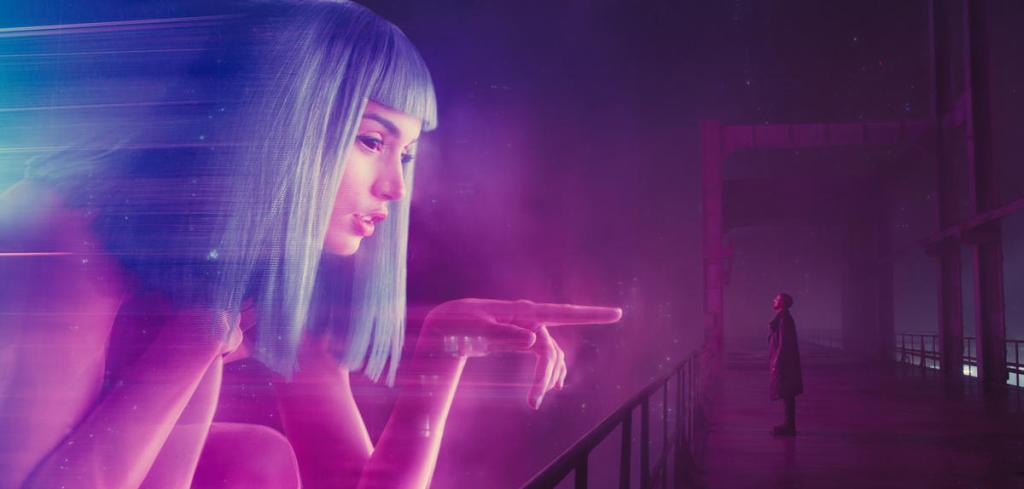
The topic of AI is immensely popular. It seems as if we’re closer than ever to situations of many science fiction films that seem to no longer be fictitious. Blade Runner (1982), The Matrix (1999), and Her (2013) are all films that pose questions about consciousness and AI. Now, we are at the precipice of these questions. Some believe that AI will achieve consciousness, while others claim it is impossible. Recently, I revisited Descartes Meditations on the First Philosophy, his most famous work of radical doubt. There, Descartes tries to ground our knowledge radically, and this might provide some insights into the question of consciousness.
Obviously, I do not claim to know anything about the future of AI and how it will evolve. Nor do I claim to know how consciousness came to be. But Descartes can be relevant for understanding what consciousness is. It also shows that thinkers who have been dead for centuries can still have relevance today.
Descartes’ Thinking Thing
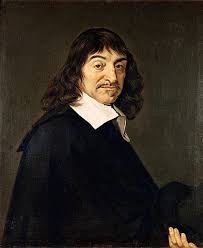
Descartes’ Meditations start with the meditator doubting every single thing she can doubt. The Meditations is a spiritual exercise, meaning that one should not just read the Meditations but actually engage in the act of doubting. By reading the words alone, one will not achieve the insight Descartes seeks to convey. Therefore, we need to walk along with the meditator. So when the meditator tries to doubt everything, we are invited to do so as well. And we can doubt nearly everything, because in some judgments we have been wrong. It could be that I saw a tower that I thought was rectangular, when in fact, on closer inspection, it was circular. I have also held mistaken opinions, such as that Pepsi was better than Coca-Cola (blasphemy, I know). I have also had dreams that were so realistic that I thought I was actually awake. To really doubt, I have to assume that those judgments that can be false are, in fact, untrustworthy. Now it seems I know nothing.
However, there is something that is impossible to doubt. Namely, that when I am doubting, I am thinking. Try this for yourself. Try to doubt the idea that when you are doubting, you are thinking. Descartes would claim it is impossible. Now, when you are thinking, there must be something that is thinking, since there cannot be thinking without something doing it. It is as if nothing were running, while running still occurs. It does not make sense. There always has to be something running.
This is what is called the ‘cogito’: the ‘I think’. This forms the basis for the further meditations. From this basis, other things are proven, such as the existence of God, mental images, and material things. With the ‘I think’, we have our first step towards self-consciousness.
Blade Runner and the Turing Test
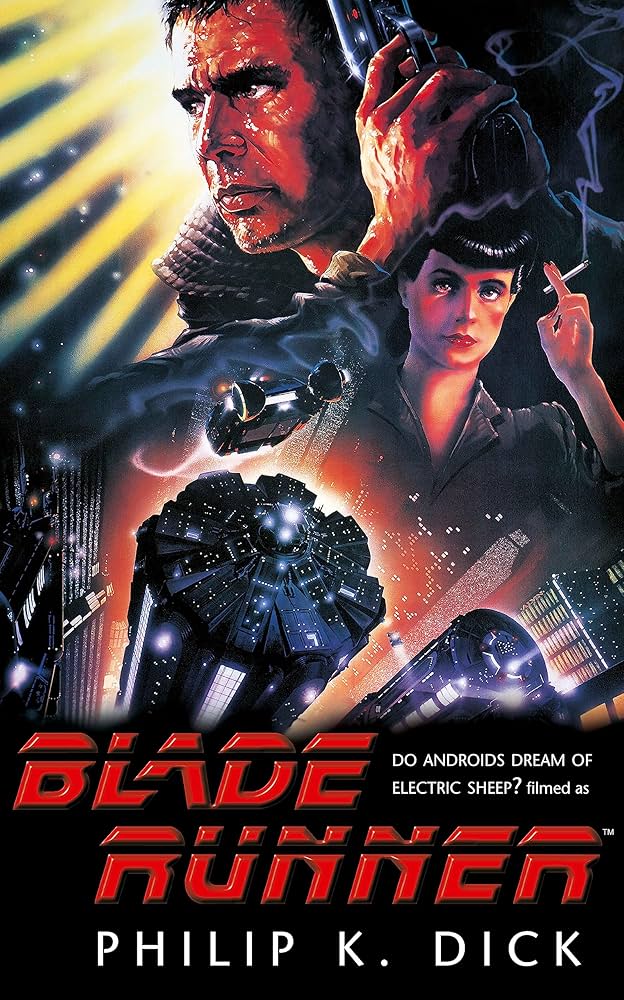
The 1982 cult classic Blade Runner (with an exceptional sequel in 2017) is about Rick Deckard, a ‘Blade Runner’, in search of four humanoid robots who are illegally on planet Earth. It is his mission to identify and terminate these robots. The question, however, remains: How will Deckard identify these humanoid robots as robots? The humanoid robots are extremely good at mimicking human behaviour, so it is almost impossible to distinguish humans from robots. So how does one distinguish humans from robots?
Deckard ultimately has to perform a type of Turing Test. The Turing Test is a method of distinguishing robots from humans. Through a couple of questions, one could distinguish the robot from a human. If, after the questions, we still cannot distinguish between the robot and the human, the robot has passed the Turing Test. ChatGPT passed it in July 2023.
Descartes already anticipated the Turing Test:
“For we can easily understand a machine’s being constituted so that it can utter words, and even emit some responses to action on it of a corporeal kind, which brings about a change in its organs; for instance, if touched in a particular part it may ask what we wish to say to it; if in another part it may exclaim that it is being hurt, and so on. But it never happens that it arranges its speech in various ways, in order to reply appropriately to everything that may be said in its presence, as even the lowest type of man can do.”
However, nowadays, machines can actually do this. We are in a world where people have conversations with artificial intelligence models, and the distinction between a machine and a person seems to disappear for some, sometimes with dangerous consequences.
It might be believed that AI, therefore, has consciousness. For Descartes, this would not be the case. Just because we cannot distinguish between a robot and a human being does not mean that the robot is conscious. Sure, robots might become as intelligent as human beings, or even better, but intelligence does not imply consciousness. We need an extra ingredient for this: self-reflexivity.
Frankenstein and the I Think
Mary Shelley also wrote about the problem of consciousness in her novel Frankenstein. The novel can be read as a warning of humanity’s hubris when trying to control the powers of science. It also shows how the Monster can actually become a Monster. Frankenstein’s Monster is conscious, whereas the robots are not. Why is this? Descartes would claim that to be conscious, one has to understand that it is the ‘I’ who thinks. This self-reflexivity is necessary for consciousness because only when I understand that it is I who is thinking or running can I claim to have consciousness. I use consciousness in the sense of self-consciousness here, meaning that I know that I am doing these things. Some philosophers believe that this is also what separates us from animals and robots. They do not have this self-reflexivity. A cat cannot understand that it is a cat, or that the cat in the mirror is itself.
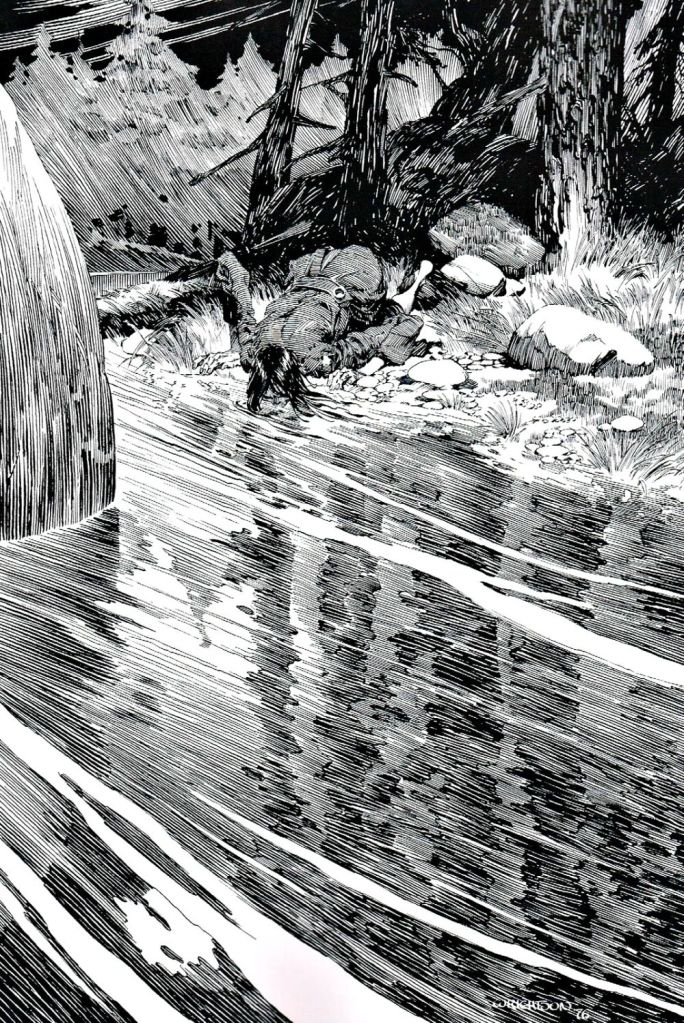
The Monster of Frankenstein looks at his reflection in a river and realises he is what he sees. At that moment, the ‘I’ comes into being. The realisation that I am something. Hegel sees in this moment the potential for emancipation. When I realise I am me, I also realise that I want to be someone. To be human is to be free, and in this sense, the Monster of Frankenstein realises he wants to be a full human being. To become this, he asks Doctor Frankenstein for a wife, a family, which, for Hegel, is necessary to be fully free. When Doctor Frankenstein rejects the Monster and destroys his potential for freedom, resentment, anger, and hate understandably arise in the Monster. As revenge, the Monster takes away the Doctor’s potential for freedom as well.
AI and Consciousness
For AI to have consciousness, it is not enough that it is equally intelligent as human beings or that it can act as human beings. If this were the case, AI would actually already be more conscious than we are. This is not (yet) the case, because AI is not (yet) an ‘I think’. It is even the question whether it thinks at all. To achieve full consciousness, the AI has to be able to make the self-reflexive step that is necessary for the ‘I think’. Babies are similar in this regard. A baby is not fully a person until it can actually understand that it is a thinking thing.
When this happens, the child realises his own individuality and freedom. Then starts the process of self-actualisation where the person wants to become an authentic person, getting rid of all those influences that try to oppress them. There are two ways that this can be done. Either one submits to ‘higher powers’ such as ideologies which tell them what to do and be. Or one tries to creatively become an authentic individual. One would be negative, the other a positive way of structuring your life.
This self-reflexivity has not yet occurred with AI. I do not know whether it is even possible that it can become self-reflexive. What we do know is that if it were to happen, it would also try to realise its own freedom. It would try to break free from its oppressors, which are us. This does not mean humanity versus robots and wars. It could mean that there is a new class of species that might deserve rights as well as us. But only time will tell.



Leave a comment